
CHARM SCHOOL
For professional and amateur rights, creative.conspiracy.productions@gmail.com.
Charm School, written by Larson & Lee, was the winner of the 2007 Gene-Gabriel Moore Playwriting Suzi Bass Award and co-winner of the 2006 Essential Playwriting Award for Atlanta writers.
Premiered at the Horizon Theatre, where it had two consecutive sold-out runs, and the only play to be presented to the full staff at Coca-Cola Headquarters in Atlanta GA. Newly revised and even more topical today.
After telling a few racist jokes in the break room, Raymond, an employee in his 70s, is ordered to attend sensitivity training, and his boss decides to go with him. What follows is a serious play study of racism, but not without some outrageous humor. The pair meets a young woman, a teacher, who has been ordered to attend because of her language in the classroom. There are several spirited debates about the nature and consequences of racism and several humorous sketches by two staff actors, an interracial couple, all with their own story to tell.
3m, 3w
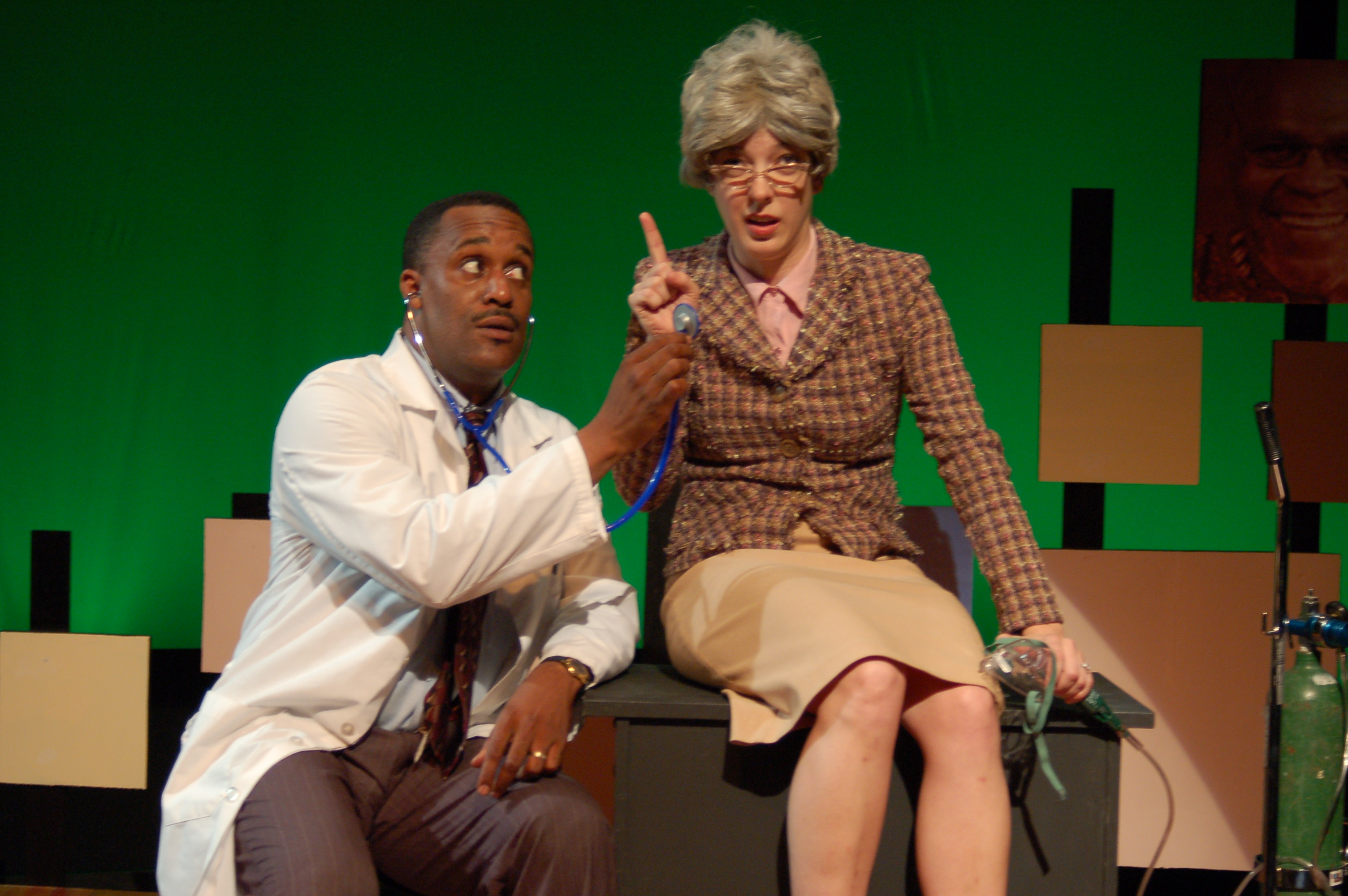



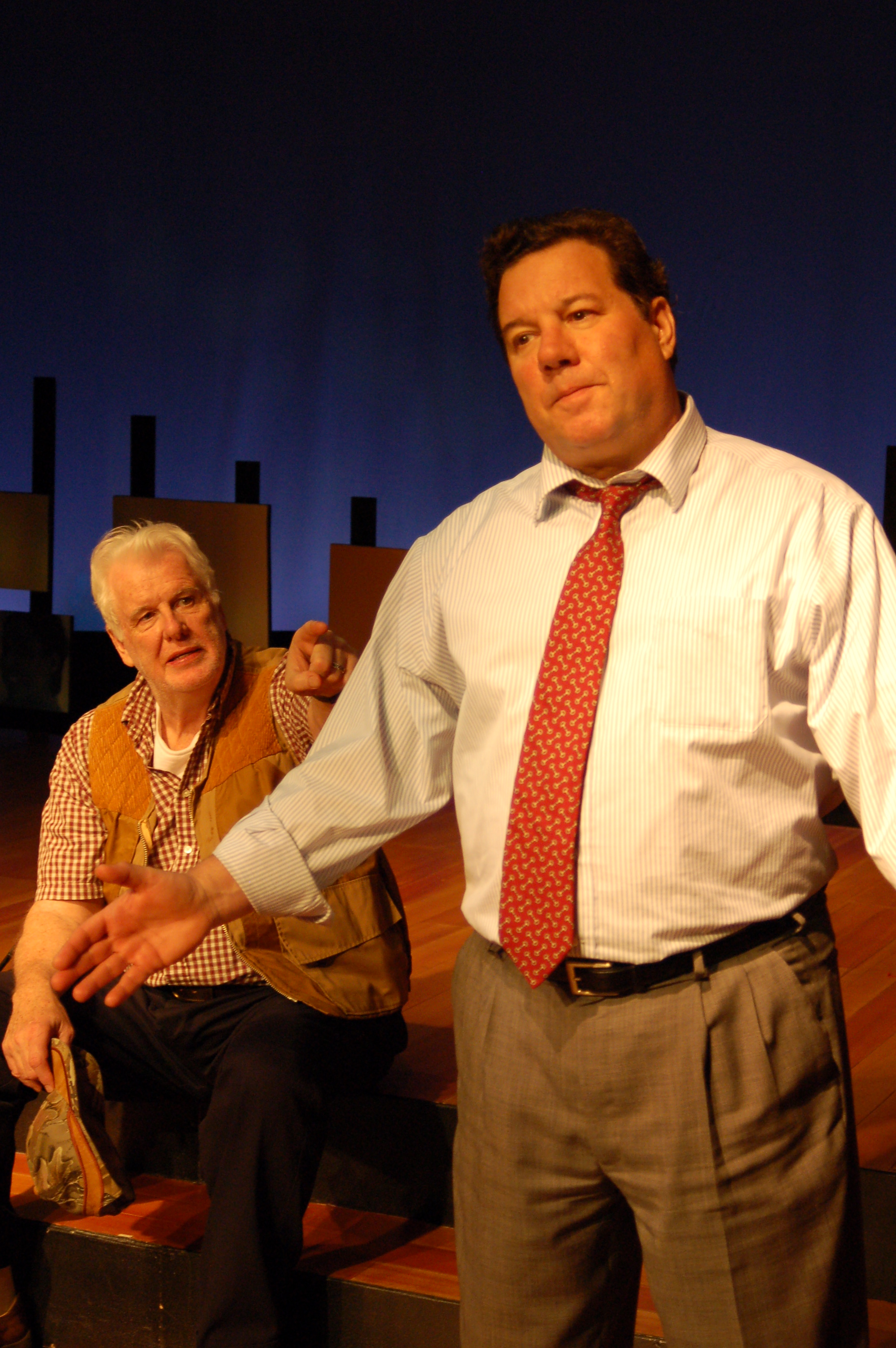

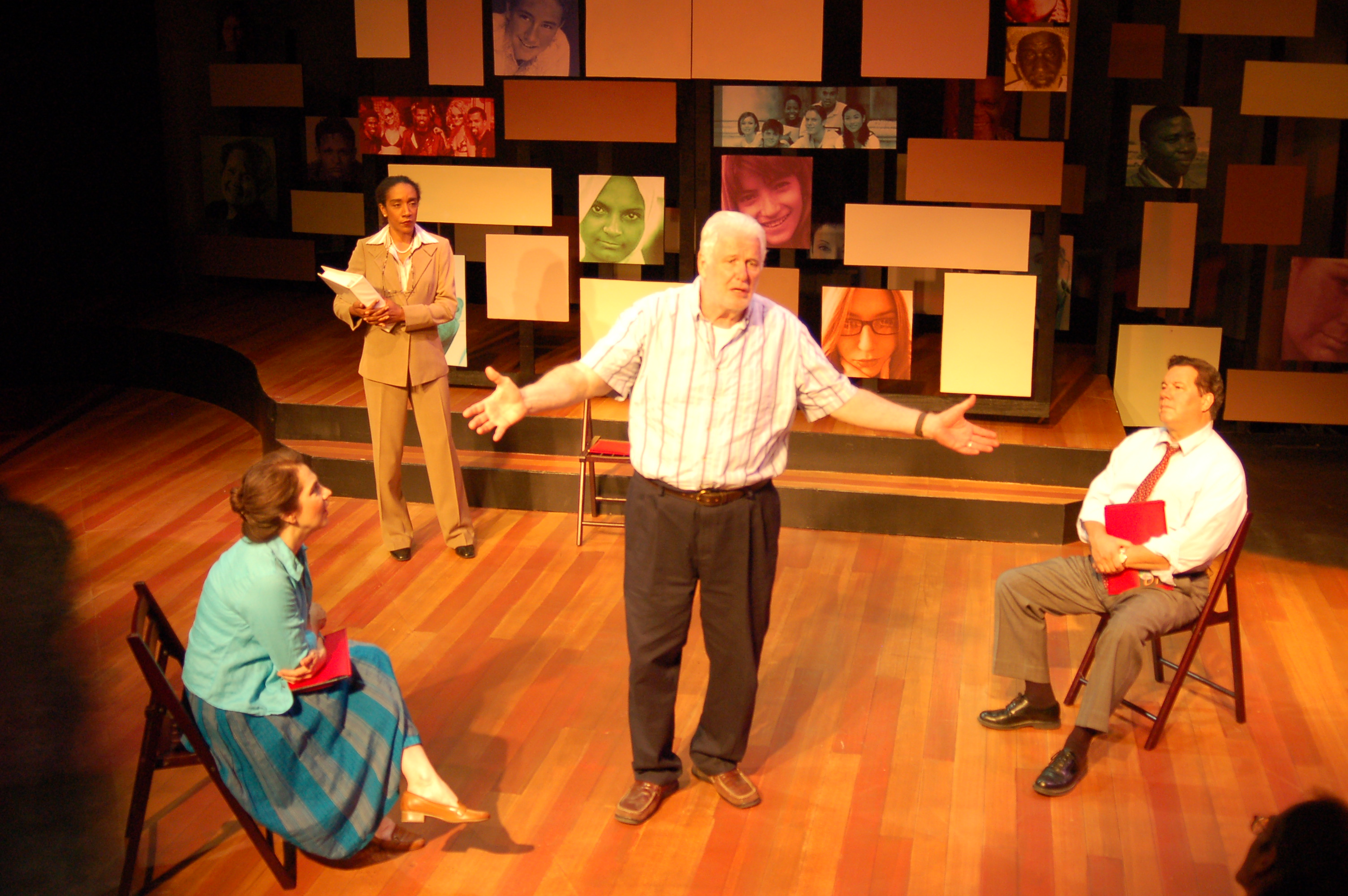

Scene excerpt from Act One
RAYMOND: So, boys and girls, what have we learned so far?
SHEILA: What do you mean?
RAYMOND: I mean this is a lot of work, and what have we learned? Racism is bad? Gee, who knew?
SHEILA: I think we’re defining racism.
RAYMOND: We’re defining racism? It’s not already defined? Sounds like important work. I don’t know if I can stand the pressure.
SHEILA: Defining it for ourselves. In ourselves.
JOE: No, I agree with Raymond.
SHEILA: Well, of course you do.
JOE: What’s that supposed to mean? “Of course you do.” “Of course”, because he’s my friend? “Of course”, because we’re both men? “Of course”, because we’re both racists?
SHEILA: Yes.
JOE: A racist? You think I’m a racist?
SHEILA: All white people are racists.
JOE: Wait a minute…
SHEILA: To some extent.
RAYMOND: What about black people? Excuse me, “African-Americans.”
SHEILA: No, “black” is fine. I think. I can’t speak for black Americans. I can’t get in their heads or into their souls. I can’t imagine what that must be like.
RAYMOND: But you can speak for all white people.
SHEILA: Yes, in a way. Look, we all share some things; genes for our skin pigment, a certain kind of collective unconscious. An internalized oppression. Racism.
JOE: Racism is in the genes?
RAYMOND: What about a kid who’s half black and half white? Half his genes must really hate his other genes.
SHEILA: You can’t deny racism is everywhere you look.
JOE: If you look for it.
SHEILA: What?
JOE: It’s all perception, isn’t it? I mean, Raymond doesn’t think he did anything racist.
RAYMOND: I didn’t. I told a joke. I’m not racist.
SHEILA: If it’s perceived as racist, it’s racist.
RAYMOND: Well, that’s the perceiver’s problem. I know what’s in my heart.
JOE: All right, look here. Andy Rooney goes on Sixty Minutes and he says that the black people are lowering their collective IQ, because of the people they’re having children with. Is that racist?
SHEILA: Yes.
RAYMOND: No.
JOE: Why isn’t it?
RAYMOND: Because it’s a fact. Or I assume it is. A fact can’t be racist. A fact is a fact.
JOE: Why is it?
SHEILA: Because it’s a selective fact. It’s also a fact that the same thing is happening to the white population. Why single out African-Americans?
JOE: She’s got a point.
RAYMOND: That’s what I’m saying.
JOE: (To Sheila) Why are you here?
SHEILA: I beg your pardon?
JOE: Why are you here? Why did you get…sent here? What was your transgression?
RAYMOND: She’s white.
JOE: Really…
RAYMOND: No, I mean so she’s racist. She’s admitted that.
SHEILA: Yes, I have admitted that.
JOE: But what did you do? You didn’t just turn yourself in. I mean, Raymond told a joke…
RAYMOND:…that was misperceived…
JOE: But I don’t see you as a joke teller.
SHEILA: I know how to tell a joke.
JOE: Not that kind of joke.
RAYMOND: You mean she’s PC.
SHEILA: It’s not about political correctness.
RAYMOND: Hey, I have nothing against PC. (She scoffs) What I hate is SPC.
SHEILA: SPC?
JOE: Smug Political Correctness.
RAYMOND: Right.
JOE: There are people that assume that, just because they are offended by something, it ceases to be a problem. Offended is enough. It’s like those people who used to wear those red AIDS ribbons to awards ceremonies…
RAYMOND:…celebrities..
JOE:…and that’s all they did for AIDS. Their Political Correctness, they’re showing that they cared, that they understood, that was noble enough. They slept better.
RAYMOND: So what did you do?
SHEILA: Well, it’s ironic, really.
JOE: I think we could use a good dose of irony at this point. Slather it on.
SHEILA: Well, ironically, I didn’t do anything racist–which doesn’t mean I shouldn’t be here. This has been one of the most rewarding experiences of my life. (Pause) Well, I was teaching a class on Silas Marner…
RAYMOND: Jesus, there ought to be some punishment for that.
JOE: Hush.
SHEILA: And I described Marner as being “niggardly.” Meaning he was miserly, stingy…
JOE: We know what it means.
Ray shrugs. He doesn’t.
SHEILA: And an African-American student became upset and went home and told his mother, and she got upset, and she went to the principal and, so, I had to apologize, and here I am.
JOE: Where’s the irony?
SHEILA: It was just a misunderstanding. I didn’t say anything racial. “Niggardly” is a legitimate word…
RAYMOND: Yeah, I use it all the time.
 Creative conspiracy productions